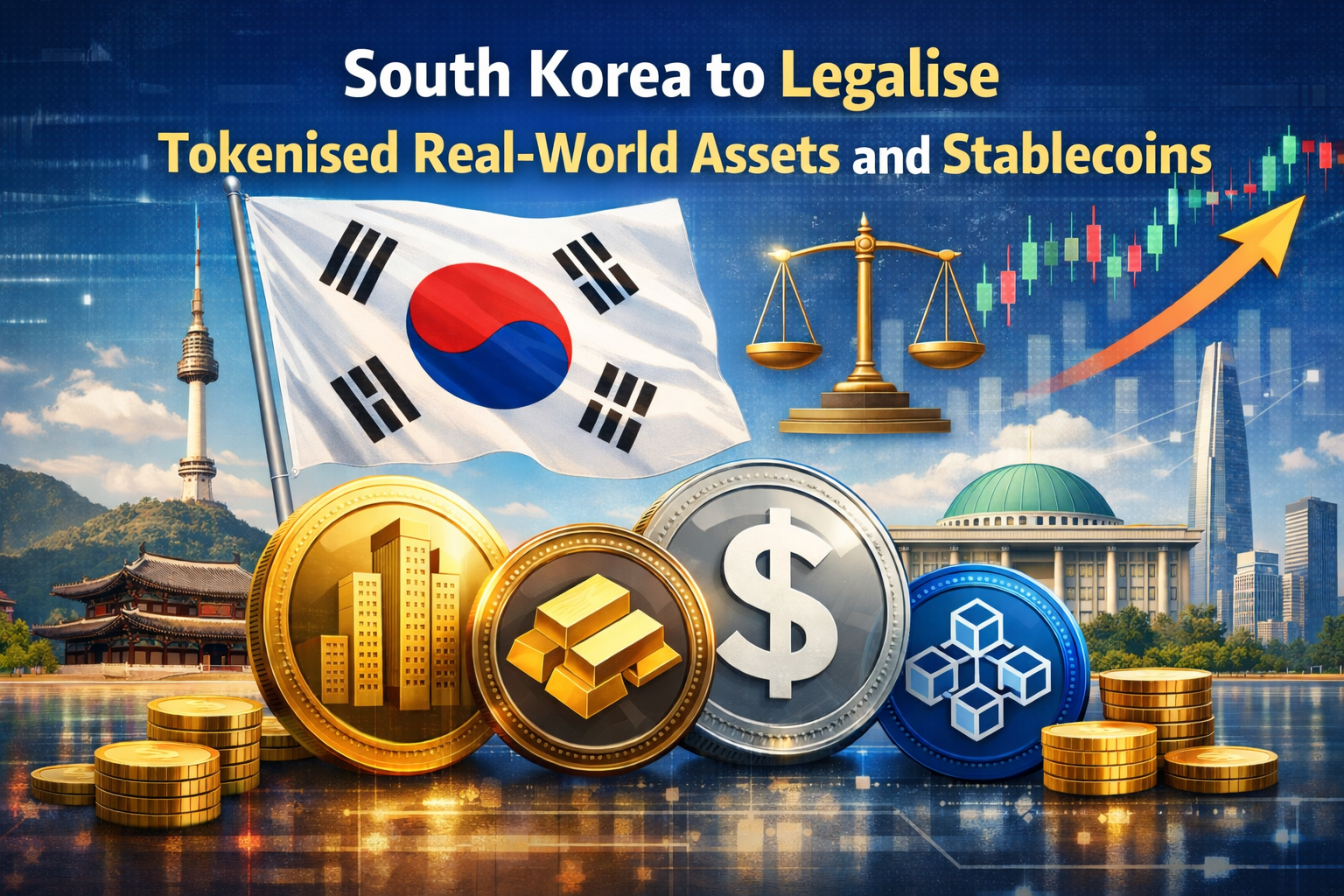
South Korea is taking a significant step toward the future of finance by exploring the legalization of tokenized real-world assets (RWAs) and stablecoins under its existing regulatory framework. This move reflects the country’s proactive stance on blockchain innovation and digital finance, positioning it as a potential global leader in the evolving crypto economy.
Tokenized real-world assets refer to physical or traditional financial assets—such as real estate, bonds, commodities, or even art—that are represented digitally on a blockchain. These tokens allow fractional ownership, improved liquidity, and faster transactions compared to traditional systems.
For example, instead of buying an entire property, investors can purchase a fraction of it through tokenization. This lowers the barrier to entry and opens up investment opportunities to a wider audience.
Stablecoins are cryptocurrencies designed to maintain a stable value by being pegged to a reserve asset, such as a fiat currency like the US dollar or Korean won. They serve as a bridge between traditional finance and the crypto ecosystem, offering the benefits of blockchain technology without the volatility associated with typical cryptocurrencies like Bitcoin or Ethereum.
South Korea’s interest in stablecoins highlights their growing importance in digital payments, cross-border transactions, and decentralized finance (DeFi).
One of the most notable aspects of South Korea’s strategy is its intention to regulate these innovations under existing legal frameworks rather than creating entirely new legislation. This approach can significantly speed up adoption while ensuring compliance and investor protection.
By adapting current financial laws, regulators can:
This pragmatic method also signals confidence in the flexibility of existing financial systems to accommodate emerging technologies.
South Korea has long been a tech-forward nation, especially in areas like internet infrastructure, gaming, and mobile technology. Its embrace of blockchain-based assets could have several far-reaching implications:
Legal clarity often acts as a catalyst for innovation. By legitimizing tokenized assets and stablecoins, South Korea may attract startups, fintech companies, and global investors eager to operate in a regulated environment.
Tokenization allows smaller investors to participate in markets that were previously inaccessible due to high capital requirements. This could democratize investment opportunities across the country.
As countries worldwide compete to lead in digital finance, South Korea’s early regulatory clarity could position it as a hub for blockchain innovation in Asia and beyond.
While the move is promising, it’s not without challenges:
The crypto and fintech industries have largely welcomed the development. Businesses often seek regulatory certainty, and South Korea’s approach provides a clearer roadmap compared to jurisdictions with unclear or restrictive policies.
Investors are also optimistic, as legal backing can increase trust and reduce perceived risks associated with digital assets.
South Korea’s initiative could set a precedent for other nations considering similar moves. If successful, it may encourage more governments to integrate blockchain-based assets into their financial systems rather than treating them as separate or fringe innovations.
This shift could lead to a more interconnected financial ecosystem where traditional and digital assets coexist seamlessly.
South Korea’s plan to legalize tokenized real-world assets and stablecoins under existing laws represents a forward-thinking approach to financial innovation. By balancing regulation with flexibility, the country is paving the way for broader adoption of blockchain technologies.
As the global financial landscape continues to evolve, South Korea’s actions may serve as a blueprint for how governments can embrace digital transformation while maintaining stability and trust.
Source :-South Korea to bring RWAs and stablecoins under existing financial frameworks